Sacraments
For more information or enquiries please be in touch here
Baptism
The sacrament of Baptism (sometimes called Christening) is the first of the sacraments christians receive. It is the way in which we become christians. Anyone can be baptised at any point in their lives. however this sacrament can only be received once.
Children are baptised on the understanding that they will be brought up by their Parents and Godparents to practice the faith and worship with the christian community. When they become old enough to profess their faith for themselves they are confirmed by the bishop.
Adults who wish to be baptised always receive this sacrament from the bishop alongside the sacrament of confirmation.
Confirmation
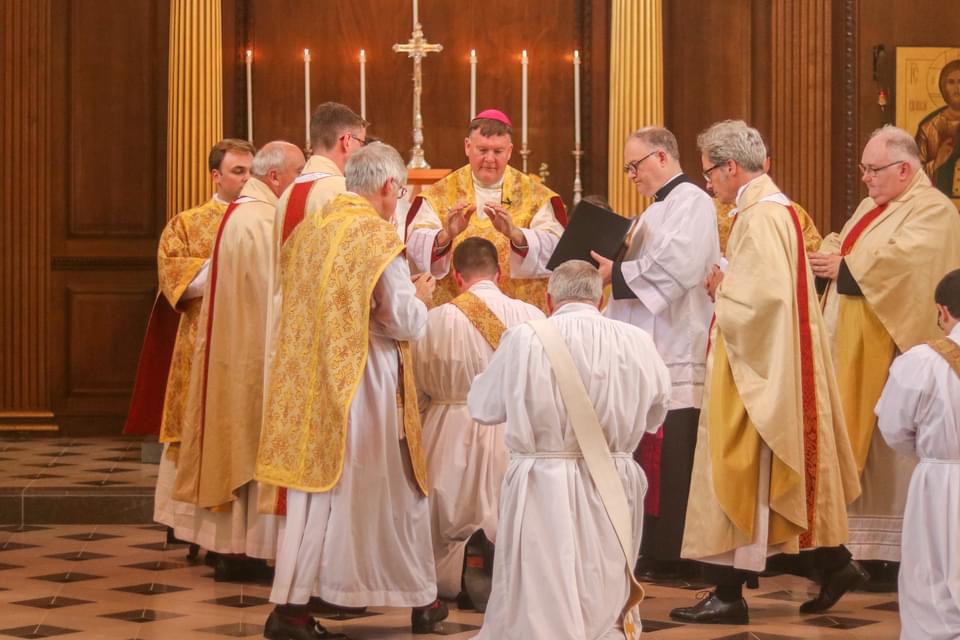
When a person is prepared to profess their faith for themselves they receive the sacrament of confirmation from the bishop. This is the laying on go a hand and the calling down of the Holy Spirit giving them the grace of firmness of faith.
To receive this sacrament you must be aged 11 and above (secondary school age) and you will undergo a series of catechesis (confirmation classes) to learn more about there faith before being presented to the bishop.
If you have not already been baptised the bishop will usually baptise and confirm you in the same service.
Marriage
Congratulations on your engagement!
Christian Marriage is the life-long union of one man and one woman who share their lives together in such a way that that they mirror the love which Christ has for the Church.
Weddings are the joyful celebration of the beginning of that life together. In a wedding, bride and groom give each other their consent, make solemn vows to one another, and have their union blessed in the presence of God. The service may also, if the couple want, take place in the context of a celebration of the Eucharist, referred to as a nuptial Mass.
It is best to get the ball rolling with organising as soon as possible. Please be in touch before you set the date to ensure that the time that you would like is possible. You will need to bring with you valid UK Passports. If you so not have a UK Passport or have a different nationality please let the clergy know as different legal procedures may apply.
To be married at Ss Peter and Paul:
- Neither of the couple can be married again if they have a spouse from a previous marriage who is still alive.
- Both of the couple must be over 18 years old
- Either of the couple must have a qualifying connection with this church this includes at least one of the following:
- living within the parish boundary,
- regularly attending this church,
- being on the electoral roll of this church,
- another member of your family being baptised or married here. Find our more here
There are statutory fees which parishes must charge they are adjusted each year see 2026 here
Anointing of the sick
Through the sacrament of anointing, we experience the healing presence of Jesus Christ himself. We read in the New Testament that that when people were sick, the apostles would lay hands on them and anoint them with oil. Oil is a sign in the scriptures of God’s special presence and protection. The Church continues this ministry to this day.
Sickness doesn’t just mean physical pain or incapacity. God wants to heal us of all our infirmity and troubles, be that of body, mind or spirit.
In the sacrament of anointing, a priest lays his hands on the sick person, praying for that individual. He then rubs olive oil, which has been blessed by a bishop, into their forehead and onto their hands in the sign of the cross, signifying through his touch the touch of Jesus himself.
Through the outward sign of oil and touch, God gives grace to uphold the sick or troubled, renews their faith, and strengthens them in order to give them healing and peace.
This sacrament can be received by anyone who is baptised when they are sick.
Confession
Jesus left to his apostles the power to retain or forgive sins. That Authority has been passed on since then through the apostolic succession to priests and bishops. From New Testament times the practice of confessing sins to one another, particularly to those who have the apostolic ministry to loose and to bind sin has been a vital part of life as a christian.
In the sacrament of confession we bring to God all that we know we have done that is wrong. These things which we call sins are that which damage our relationship with God. By confessing them to God in the presence of a priest we have the opportunity to receive the forgiveness won for us by Jesus’ death on the cross. In this sacrament we tell the priest all of our sins within a context that is absolutely and completely confidential and there we receive advice, counsel and absolution.
The clergy would be happy to hear your confession after any mass or by appointment. Extra times for confession are publicised throughout the year. If you have never received this joyful sacrament or if it has been a long time the clergy would be very happy to help you to prepare and guide you through it.
This sacrament can be received by anyone who is baptised at any time. There is no such thing as being “too bad” or having “too much to confess” God’s love for us is more than we can ever comprehend and He is always willing to receive us back when we turn to him no matter how long it has been or how bad we have been.
Ordination
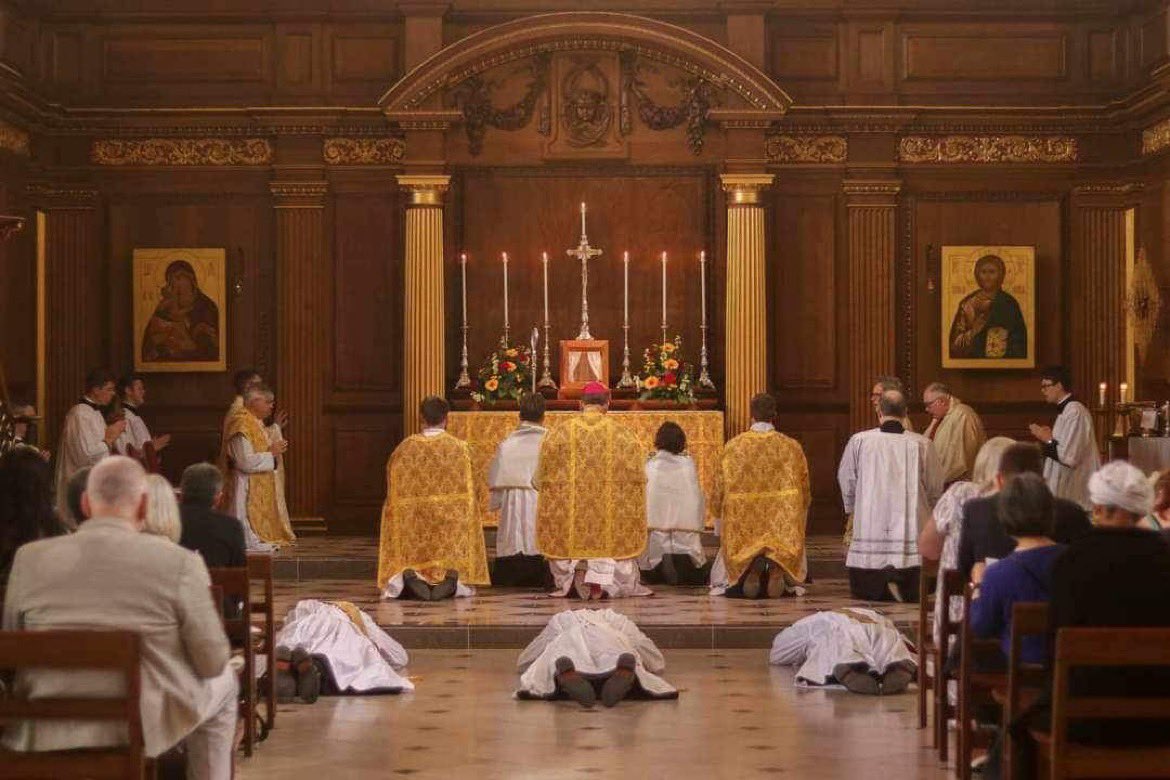
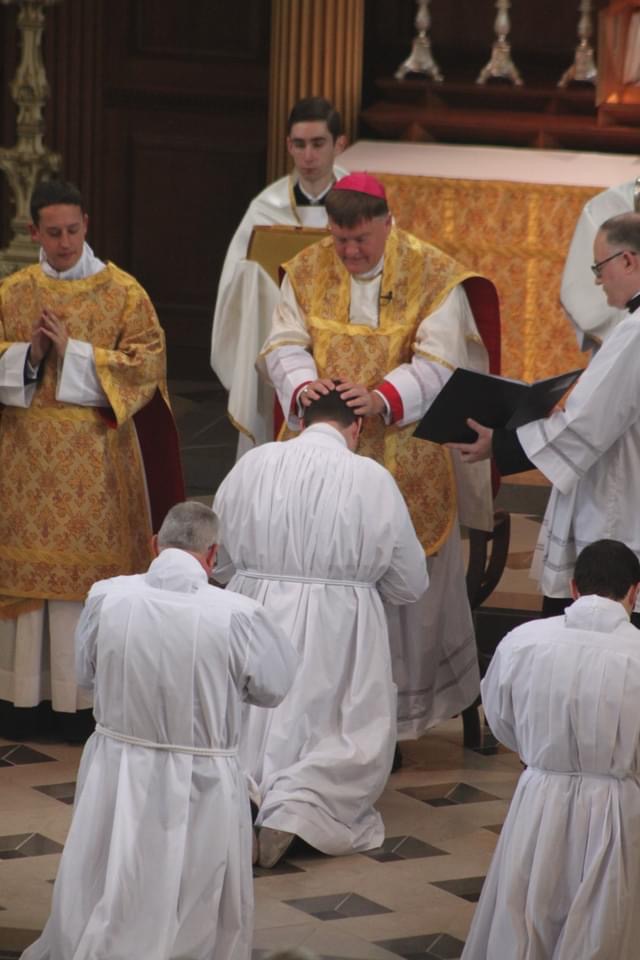
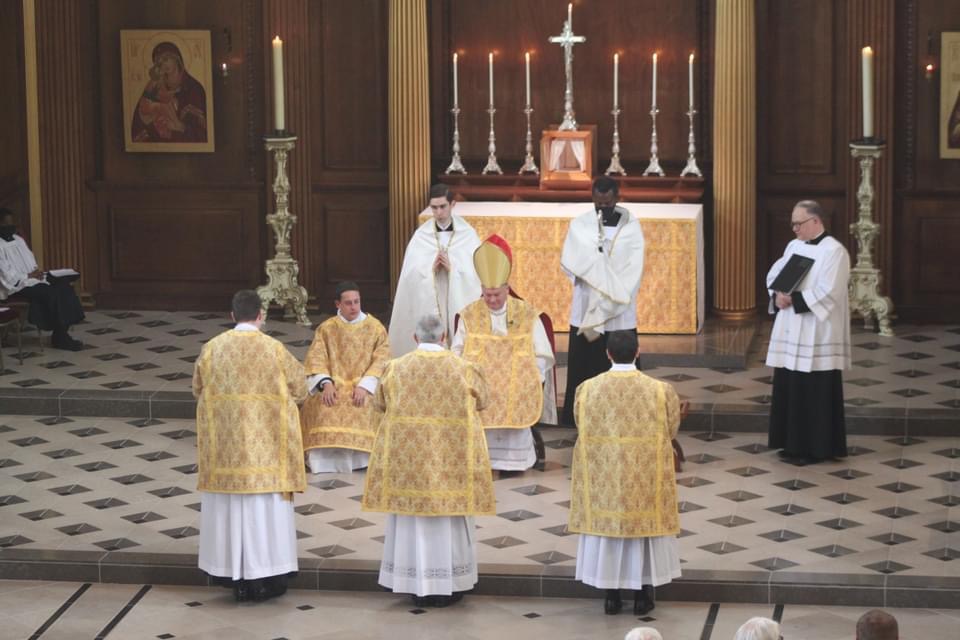
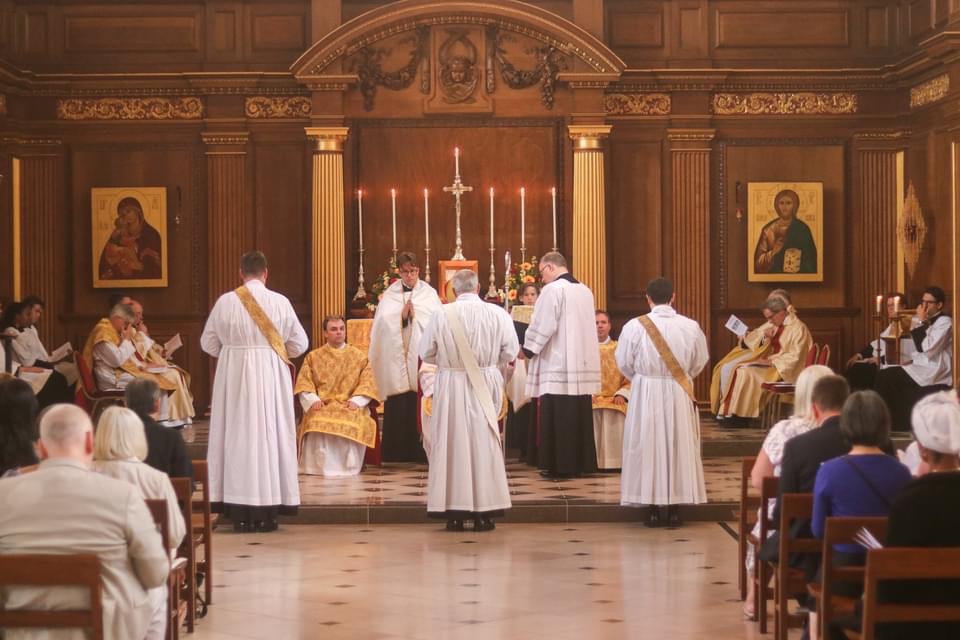
If you are a man who is discerning your call to the diaconate and/ or the priesthood please see here
Holy Communion
Holy Communion, The Mass, The Lord’s Supper, The Eucharist, The Blessed Sacrament are all names for the principal form of worship for christians. In our parish we most commonly call this sacrament The Mass, from the latin Missa meaning middle or central.
It is from the Mass and to The Mass that all of our christian lives lead. In its celebration the priest who stands in persona christi (in the person of christ) and imitates the actions of Jesus at the last supper consecrating bread and wine which in that action becomes Jesus Christ present among us.
Jesus said “this is my body” “this is my blood” and so we believe that he is good to his word and the bread and wine become his body and his blood. It is by taking part in this act that we are drawn closer to Jesus and that we are fed body and soul to be able to go out and live our lives to His glory.
Anyone can attend the mass which is celebrated here every day but only those who are confirmed may receive communion. This is because we need to be aware of what we are doing when we come to receive Jesus in this way. St Paul writes (1 corinthians 11:27-29)
Wherefore whosoever shall eat this bread, and drink this cup of the Lord, unworthily, shall be guilty of the body and blood of the Lord. But let a man examine himself, and so let him eat of that bread, and drink of that cup. For he that eateth and drinketh unworthily, eateth and drinketh damnation to himself, not discerning the Lord’s body.
In this sacrament we a brought the closest we will ever be win this earth ton God himself receiving Him in his fulness where heaven touches earth.